Published
8 Reasons Your AC Isn't Cooling
Most cooling problems come down to four things: airflow, power, refrigerant or a worn part. Work through the list in order, starting with the easy checks. If your home has a heat pump, most of these causes apply in cooling mode too. Our heat pump repair team can help with those systems.
1. The Thermostat Is Set Wrong
It sounds too simple, but it happens in plenty of homes. Make sure the thermostat is set to Cool, not Heat or Fan. Set the fan to Auto, because On keeps air moving even when the system isn't cooling. Then set the temperature a few degrees below the room temperature and give it several minutes to respond.
If the screen is blank, replace the batteries. An older thermostat can also drift and misread the room. If yours is due for an update, our thermostat installation service can help.
2. The Air Filter Is Clogged
A dirty filter chokes the airflow your AC depends on. Less air across the indoor coil means weaker cooling, longer run times and higher bills. In bad cases, the coil can even freeze. Pull the filter and hold it up to a light. If you can't see light through it, replace it. We cover this fix in detail in our guide to dirty air filters and AC cooling.
3. A Breaker Tripped or the Disconnect Is Off
A central AC has an indoor unit and an outdoor condenser, and each one has its own power. If the indoor fan runs but the outdoor unit is silent, check your electrical panel for a tripped breaker. Reset it once. If it trips again, leave it off and call a technician, because repeated trips point to an electrical fault.
Also check the disconnect box mounted on the wall near the outdoor unit. It's easy to switch off by accident during yard work or a home project.
4. The Evaporator Coil Froze
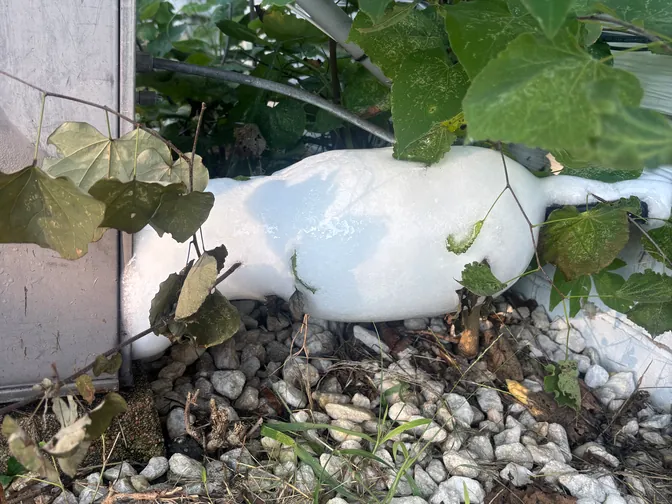
Ice on the refrigerant lines or the indoor coil means the system can't absorb heat the way it should. Restricted airflow and low refrigerant are the usual causes. Switch the system to Off and set the fan to On to help the ice melt, which can take a few hours.
Don't chip at the ice. The coil's thin fins and tubing damage easily. If the coil freezes again after it thaws, the root cause still needs a technician.
5. The Outdoor Condenser Is Dirty or Blocked
The outdoor unit releases the heat your AC pulls out of the house. When its fins are packed with grass clippings, leaves or cottonwood fluff, that heat has nowhere to go. Turn off power at the disconnect first. Then clear the debris and trim back plants so air can move freely around the unit.
Rinse the fins gently with a garden hose, never a pressure washer. Our post on how to clean AC coils walks through the process step by step.
6. Refrigerant Is Low or Leaking
Refrigerant doesn't get used up like fuel. If the level is low, there's a leak somewhere in the system. Warm air from the vents, a hissing or bubbling sound and ice on the lines are common signs. Adding refrigerant without fixing the leak only buys a little time.
Finding and sealing a leak takes specialized tools and training, so this one belongs to a technician. Our AC repair service starts with a full diagnosis, so we fix the cause and not just the symptom.
7. A Capacitor, Contactor or Compressor Is Failing
The capacitor gives the motors the jolt they need to start. The contactor switches the outdoor unit on and off. When either one wears out, you may hear humming or clicking while the outdoor fan or compressor fails to start. These are among the most common repairs we make.
The compressor is the heart of the system, and a failing one is a bigger repair. Capacitors can hold a dangerous charge even with the power off, so leave these parts to a professional.
8. Leaky, Crushed or Undersized Ductwork
Sometimes the AC makes plenty of cool air, but it never reaches your rooms. Leaky joints, crushed flex duct and disconnected runs can dump that air into the attic or crawl space. If some rooms stay warm while others feel fine, ductwork is a likely suspect. Ducts that are too small for the system cause similar trouble. A technician can inspect the ductwork you can't easily reach and measure airflow at the vents.
What You Can Check Yourself vs. When to Call
Some checks are safe for any homeowner. Others involve electricity or refrigerant and belong to a trained technician.
Safe Checks for Homeowners
- Confirm the thermostat is set to Cool and below the room temperature
- Replace the batteries in a battery-powered thermostat
- Check the air filter and replace it if it's dirty
- Reset a tripped breaker one time
- Make sure supply vents and return grilles are open and clear of furniture
- Clear leaves and debris from around the outdoor unit with the power off
- Check that the condensate drain line near the indoor unit isn't overflowing
Call a Technician When
- The breaker trips more than once
- Ice comes back after the coil thaws
- You hear hissing, grinding, loud buzzing or repeated clicking
- The outdoor fan won't spin or the compressor won't start
- You smell burning or see scorch marks near the unit
- The system runs nonstop but the house never reaches the set temperature
Repair or Replace?
Most cooling problems can be repaired, and a repair is often the right call for a system in good shape. Common fixes, like a capacitor, a contactor or a cleaning, start at $150–$500. Bigger repairs, such as a blower motor, a control board or a compressor, start at $550–$1,300 or more.
Most central air conditioners last about 10 to 15 years with regular maintenance. Replacement starts to make sense when a system is near that age, needs repairs often, or faces a major failure. AC replacements start at $4,300–$14,000, depending on the system. These are starting ranges to help you plan, and final pricing depends on your home and equipment. You can see all of our starting price ranges in one place.
If you decide to replace, we'll walk you through your options for a new AC installation. Residential systems come with a 1–5 year labor warranty from BreezeTech. You can also ask about our financing options.
Keep Your AC From Quitting Next Summer
An annual tune-up catches worn capacitors, dirty coils, low refrigerant and clogged drains before they leave you without cooling. Our AC maintenance visit covers the whole system, inside and out. The Breeze Protection Plan bundles annual tune-ups with priority service, so you're at the front of the line when the heat hits.
AC Not Cooling FAQs
The most common causes are a clogged air filter, a thermostat set to Fan instead of Cool, a dirty outdoor unit or a tripped breaker on the outdoor side. If those all check out, low refrigerant or a failing capacitor are next on the list. Both need a technician.
Ice forms when the indoor coil gets too cold, usually because of restricted airflow or low refrigerant. A dirty filter, closed vents or a weak blower can starve the coil of warm air. Thaw the system by turning cooling off, then replace the filter. If the ice comes back, call for service.
You can handle the basics: thermostat settings, filter changes, a single breaker reset and clearing debris from the outdoor unit with the power off. Anything involving refrigerant, capacitors, wiring or the compressor should go to a trained technician. Those parts can be dangerous and are easy to damage.
Most central air conditioners last about 10 to 15 years, depending on how hard they work and how well they're maintained. Annual tune-ups help a system reach the long end of that range. If yours is near that age and needs a major repair, compare the repair cost with replacement before you decide.
Common repairs like a capacitor, a contactor or a cleaning start at $150–$500. Bigger repairs, such as a blower motor, a control board or a compressor, start at $550–$1,300 or more. These are starting ranges, and final pricing depends on your system. We give you an upfront quote before any work begins.
STILL NO COLD AIR?
Get Your AC Cooling Again
If you've worked through the easy checks and your home still won't cool, BreezeTech can help. We're a husband-and-wife operated team in Papillion, backed by 15 years of hands-on HVAC experience. We find the real cause, explain your options and give you an upfront quote before any work begins.
We serve Papillion, Omaha, Bellevue, Elkhorn, Gretna and La Vista, with emergency service available upon request.