

Published
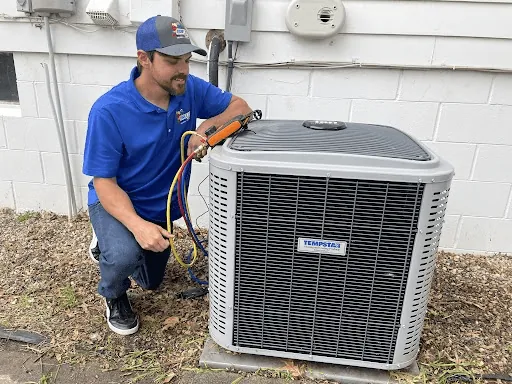
What's a Mini-Split, and Why Do Homeowners Love Them?
A mini-split system (also called ductless HVAC) is a heating and cooling setup where each room or zone has its own indoor unit, connected by a line set to an outdoor condenser. No ducts needed—each space gets its own thermostat and can run independently.
Mini-splits shine in specific situations. Room additions are perfect candidates—you don't have to run ductwork through walls or ceilings to reach a new sunroom or finished basement. Older homes without existing ductwork see huge benefits too. And if your family can't agree on a single temperature, zoning is the answer: one person gets 72°F in the bedroom while someone else keeps the living room at 68°F, all from separate units in each space. BreezeTech installs both Daikin and Bosch mini-splits, so you have modern, reliable options regardless of your setup.
The energy upside is real. You're only heating or cooling the rooms that are occupied. That targeted approach beats heating an entire home where half the bedrooms sit empty all day. Combine that with quiet, modern equipment—most mini-split indoor units run nearly silent—and you've got a system that won't interrupt a phone call or movie.
On the flip side, the upfront cost per room is higher than a central system, and covering a whole home typically means installing multiple indoor units. Some homeowners also hesitate at the wall-mounted look, though modern units have a sleeker profile than older models.
How Whole-Home Central HVAC Works (and Why It Still Leads)
A whole-home HVAC system heats or cools air in one central location—usually a furnace or heat pump in a basement, attic, or closet—then distributes it through ducts to every room. One system, one thermostat, one set of equipment to maintain.
The central advantage is simplicity and uniformity: every room in your home stays at the same temperature. That's comfort for families who don't want to manage multiple zones. The equipment stays hidden—no wall-mounted units taking up wall space—and modern central systems offer powerful efficiency options. Tempstar furnaces and heat pumps, for example, can cut your heating costs significantly when paired with proper maintenance.
Central systems also open doors to advanced air quality upgrades. Aprilaire and Honeywell air filtration systems, humidifiers, dehumidifiers, and UV purification all integrate into your ductwork, conditioning every breath of air in your home in one pass. Mini-splits can handle basic filtration, but they don't match the full-home air quality reach of a good central system.
The tradeoffs exist too. You need ductwork (and older ducts sometimes need sealing or cleaning to stay efficient). Zoning requires add-ons like motorized dampers or a programmable system, not a standard thermostat. And if your central system fails, you lose conditioning everywhere, whereas a mini-split failure affects only that zone.
Mini-Splits Shine Here
- Room additions and sunrooms — Extend comfort to new spaces without major ductwork.
- Older homes without ducts — Avoiding a full duct retrofit saves thousands.
- Customized room comfort — Each person gets their own thermostat.
- Energy-conscious sizing — Heat or cool only occupied zones.
- Basement and garage conversions — Perfect for bonus spaces and hobby areas.
Whole-Home Systems Are Better When
- You want uniform comfort — The same temperature everywhere simplifies management.
- Air quality matters — Advanced filters, humidifiers, and UV purification integrate seamlessly.
- Your home already has ducts — Leverage existing infrastructure and avoid retrofit costs.
- You prioritize simplicity — One system, one filter, one maintenance routine beats managing multiple units.
- You plan to stay 10+ years — Central systems have a lower cost-per-year over time.
How to Tell Which Fits Your Home
Ask yourself these questions:
Layout and Structure: Does your home have existing ductwork, or would running ducts be expensive? A mini-split makes ductwork obsolete, which is a huge win if your home wasn't designed for it.
Comfort Preferences: Do family members fight over the thermostat? Mini-splits let everyone have their way. If uniformity matters more, a central system is simpler.
Future Plans: Are you staying for decades, or might you move in five years? Central systems spread their cost over time; mini-splits pay off faster in shorter timeframes.
Air Quality Goals: If you're serious about filtration, humidity control, or UV purification, a central system's ducted infrastructure makes those upgrades more powerful and easier to manage.
Budget: What's your upfront threshold, and how sensitive are you to monthly energy bills? Mini-splits cost more per room but save on operations. Central systems ask for more capital up front but deliver predictable whole-home comfort. Financing and rebates can help with either choice; financing is available with approved credit, so ask us for details.
The Energy Question: Mini-Split Efficiency vs. Central
It's easy to assume mini-splits are always more efficient—and they can be—because you're not heating unoccupied spaces. But a modern, high-efficiency Tempstar heat pump can match or beat mini-split efficiency across the whole home, especially when ductwork is well-sealed and your home is properly insulated.
The real question isn't which is more efficient; it's which is more efficient for how your household actually uses your home. If you occupy 70% of your home most days, a mini-split's targeted approach wins. If you move freely through your entire home and want steady, predictable temperature everywhere, a central system's efficiency rival's mini-split efficiency over a full year.
What to Ask Before You Decide
Before you choose, talk to an HVAC contractor about:
- Installation complexity — How much ductwork already exists? Would a retrofit be realistic?
- Long-term maintenance — What does preventive care look like for each option?
- Equipment lifespan and parts availability — Which system supports the brands and service you need?
- Financing and rebates — Both mini-splits and central systems qualify for utility rebates, and financing options are available with approved credit.
- Warranty coverage — What manufacturer warranties apply, and what does preventive maintenance do to your coverage?
Common Mini-Split and Central HVAC Questions
Mini-splits work year-round because most are heat pumps—they can heat with a refrigerant cycle and don't need a backup furnace. If your current heating is electric baseboard or a separate system, a heat pump mini-split can replace heating entirely. If you already have a furnace and ductwork, upgrading just the cooling leaves you managing two separate systems, so a full retrofit or a ductless-plus-furnace combo often makes more sense.
Yes, but it's unusual. You'd have a mini-split for cooling (or heating and cooling in mild weather) and a furnace for winter backup. This hybrid approach costs more upfront and requires managing two systems. It's worth considering only if your home layout makes a pure central system or pure mini-split impractical—for example, an addition far from existing ductwork that you heat minimally during winter.
It depends entirely on your home's layout and heating and cooling load. Each indoor unit conditions one zone or open area, so larger or more segmented homes need more units than a small, open floor plan. A contractor measures your specific home and calculates the load room by room to tell you exactly how many units you'd need and where to place them.
No. A professional installer drills a small hole through an exterior wall or ceiling to run the refrigerant line set and electrical wire from the indoor unit to the outdoor condenser. The indoor unit mounts on a wall or ceiling, and the outdoor unit sits on a pad or mounts on the side of your home. No structural changes needed.
Modern mini-split indoor units run nearly silent, often quieter than a central system's blower. Central systems produce some blower noise in the ducts, though well-designed ductwork and quality equipment help minimize it. Both options are quiet enough for comfortable conversation and sleep. If noise sensitivity is a priority for you, ask your installer to compare specific models before you decide.
Mini-splits: clean outdoor condenser coils annually, check refrigerant charge and electrical connections, replace any disposable filters in the indoor units (less often than central filters). Central systems: replace furnace or air handler filters every 1–3 months, have ductwork cleaned annually or as needed, inspect the condenser coils. Both benefit from a professional tune-up in spring and fall.
Technically yes, but why would you? If you already have ductwork, a central system uses it and costs less than removing ducts and installing multiple mini-split units everywhere. The exception: adding a mini-split to one room or zone alongside your central system (for example, a new addition with its own mini-split while the rest of the home uses central conditioning).
Both systems last many years with proper maintenance. Real lifespan depends on usage, maintenance, and component quality. What matters more than the number is the service support: choose equipment from brands with strong parts availability and local contractor support. BreezeTech services all major makes and models and carries Tempstar, Daikin, and Bosch equipment, so you're covered whether you choose central or ductless.
FIND YOUR RIGHT FIT
Explore Mini-Split Options for Your Home
The best system is the one that matches how your home is built and how your family uses it. If you're torn between options, BreezeTech's team can walk you through both approaches, look at your home's layout, and show you the upfront costs, operating costs, and long-term comfort picture for each. We service and install central systems and mini-splits across Papillion, Omaha, Bellevue, Elkhorn, Gretna, and La Vista—and we're happy to answer your questions without pressure.
Ready to explore whether a mini-split fits your home? BreezeTech installs and services ductless systems across Papillion, Omaha, Bellevue, Elkhorn, Gretna, and La Vista. Reach out and let's talk through your home's needs and find the setup that saves you money while keeping your family comfortable.